Natural Pest Control in Chennai

02 Sep
Introduction
A new building represents a major financial and emotional investment. However, hidden termite activity can silently weaken wooden fixtures, flooring, doors, cupboards and other cellulose-based materials. Once termites establish an underground colony, controlling them may become costly and disruptive. Therefore, prevention should begin during construction—not after visible damage appears.
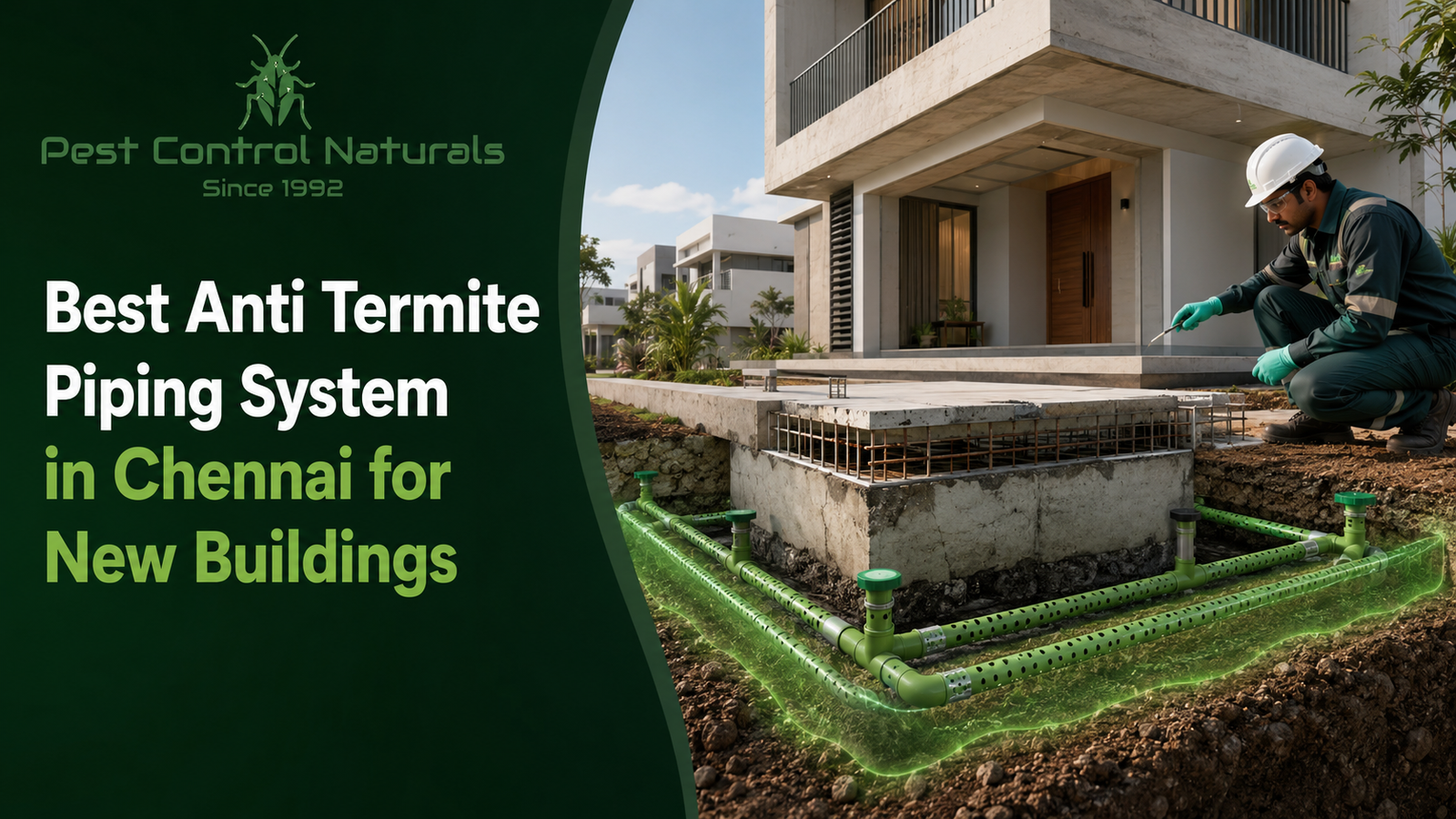
Installing the Best Anti Termite Piping System in Chennai for New Buildings provides a practical and long-term solution. This concealed network of perforated pipes allows termite-control chemicals to be distributed beneath the building without drilling floors repeatedly. It creates a protective chemical barrier around vulnerable areas and makes future treatments faster, cleaner and more effective.
For builders, architects and property owners, a professionally planned piping system can protect the structure while reducing future maintenance expenses.
What Is an Anti-Termite Piping System?
An anti-termite piping system is a network of specially designed pipes installed beneath the flooring and around the foundation during construction. These pipes contain strategically positioned perforations that distribute approved termiticide evenly into the surrounding soil.
The system generally covers termite-prone areas such as:
- Building foundations and external perimeters
- Wall and floor junctions
- Utility entry points
- Bathrooms and kitchens
- Expansion joints
- Areas surrounding plumbing lines
- Wooden flooring and fixed furniture zones
After installation, technicians inject an appropriate termite-control solution through accessible inlet points. The chemical travels through the network and enters the soil through controlled openings, forming a continuous protective barrier.
Why Do New Buildings in Chennai Need Termite Protection?
Chennai’s warm climate, humidity and seasonal rainfall can create favourable conditions for subterranean termites. These termites live underground and enter buildings through extremely small cracks, construction joints and utility openings.
New buildings may still face termite risks because construction sites often contain buried wood, cardboard, tree roots and other organic materials. Furthermore, untreated soil and moisture around foundations can attract colonies.
Early protection offers several powerful advantages:
- Prevents hidden infestations: The treatment targets underground entry routes before termites reach the interior.
- Protects valuable interiors: Doors, wardrobes, modular kitchens, flooring and furniture receive greater protection.
- Reduces future drilling: Chemical replenishment happens through dedicated inlet points.
- Supports long-term maintenance: The network remains accessible for scheduled treatments.
- Protects property value: A termite-protected building is easier to maintain and more attractive to buyers or tenants.
How Is the System Installed?
Effective installation requires coordination between pest-control professionals, builders, plumbers and electrical contractors. The work must be completed at the correct construction stage to avoid damage to the pipe network.
Step 1: Site Inspection
Technicians inspect the foundation layout, soil conditions, construction joints, water sources and planned utility routes. This assessment helps them identify high-risk zones.
Step 2: Custom System Design
The team designs a piping layout based on the building’s dimensions and foundation type. A custom plan provides better coverage than a generic installation.
Step 3: Pipe Placement
Technicians position durable perforated pipes along the inner and outer foundation walls, beneath selected floor areas and around utility entry points. They secure the pipes carefully to prevent movement during subsequent work.
Step 4: Pressure and Flow Testing
Before the flooring is completed, the team tests the system for leaks, blockages and uneven chemical distribution. This critical step confirms that the entire network functions correctly.
Step 5: Chemical Application
Once the installation passes inspection, trained professionals introduce an approved termiticide at the recommended concentration. The system distributes it into the surrounding soil.
Step 6: Inlet Identification
Accessible inlet points are labelled and documented. Consequently, future technicians can replenish the barrier without disturbing finished floors or interiors.
Seven Features of a Reliable System
Before choosing a provider, evaluate the following essential features:
1. Durable Pipe Quality
The pipes must withstand construction pressure, soil movement and chemical exposure. Weak materials can crack, collapse or become blocked.
2. Even Chemical Distribution
Properly calculated spacing between perforations helps distribute the solution consistently. Uneven coverage can leave untreated gaps.
3. Customised Layout
Every property has different foundations, dimensions and risk areas. Therefore, the piping plan must match the actual building design.
4. Accessible Refill Points
Clearly positioned inlet points simplify future chemical replenishment. They should remain accessible after construction is complete.
5. Approved Chemicals
Only legally approved termiticides should be applied by trained technicians according to the manufacturer’s instructions and applicable safety requirements.
6. Installation Documentation
The provider should supply a layout plan, treatment record, product details and maintenance recommendations. This information supports future servicing.
7. Professional After-Sales Support
A piping network is most valuable when supported by timely inspections and scheduled replenishment. Choose a company that offers clear service terms.
Piping System vs Conventional Treatment
Conventional pre-construction treatment generally involves applying termiticide directly to the soil at specific building stages. It can be effective when performed correctly. However, accessing the treated zones again may become difficult once construction is complete.
A piping system creates permanent delivery pathways beneath the building. Therefore, technicians can replenish the chemical barrier without extensive drilling. In many projects, professionals may combine soil treatment with piping protection to create a more comprehensive defence strategy.
The right approach depends on the site, construction method, termite pressure and budget. A professional inspection should guide the final recommendation.
Frequently Asked Questions
When should the piping system be installed?
Installation should take place during construction, before the final flooring work is completed. Early coordination helps technicians position the pipes correctly and prevents conflicts with plumbing or electrical lines.
Can it be installed in an existing building?
Standard underground piping is mainly intended for buildings under construction. Existing properties usually require inspection-led solutions such as drilling, chemical injection, baiting or targeted treatment.
Does the system kill termites permanently?
No termite-control method should be described as permanently effective without ongoing monitoring. The system creates a renewable chemical barrier, but periodic inspections and timely replenishment remain essential.
How frequently should the chemical be replenished?
The schedule depends on the chemical used, soil conditions, construction design, moisture levels and termite activity. Follow the written recommendation provided by the qualified service company.
Is the treatment safe?
Professional application using approved products and correct dosages helps manage risk. Property owners should follow all safety instructions, keep treatment records and prevent unauthorized access to inlet points.
How much does installation cost?
Pricing depends on the built-up area, pipe length, foundation design, number of inlet points, chemical selection and service coverage. Request a detailed site-specific quotation instead of choosing a provider based only on the lowest rate.
Can blocked pipes affect performance?
Yes. Poor installation, crushed pipes or construction debris can restrict chemical flow. Pressure testing before flooring and proper documentation can significantly reduce this risk.
How to Choose the Right Provider
Selecting a competent provider is as important as choosing the system itself. Ask for a physical site inspection, customised layout, pipe specifications, chemical details, installation stages and warranty terms.
Avoid quotations that do not clearly mention coverage areas or future service requirements. A reliable company should explain what the warranty includes, how often inspections are recommended and whether chemical replenishment carries an additional charge.
Pest Control Naturals provides professional termite-management solutions designed around the property’s construction plan and risk areas. Clear documentation, careful installation and dependable follow-up can make the protection strategy more effective.
Conclusion
Termites often remain unnoticed until expensive damage has already occurred. For this reason, preventive treatment during construction is one of the smartest decisions a property owner can make.
Choosing the Best Anti Termite Piping System in Chennai for New Buildings helps establish a renewable underground barrier, reduces future drilling and protects valuable interiors. Nevertheless, pipe quality, customised planning, approved chemical application and regular maintenance determine the system’s success.
Before completing your flooring, arrange a professional assessment with Pest Control Naturals and secure your new property from the ground up.