Natural Pest Control in Chennai
31 Aug
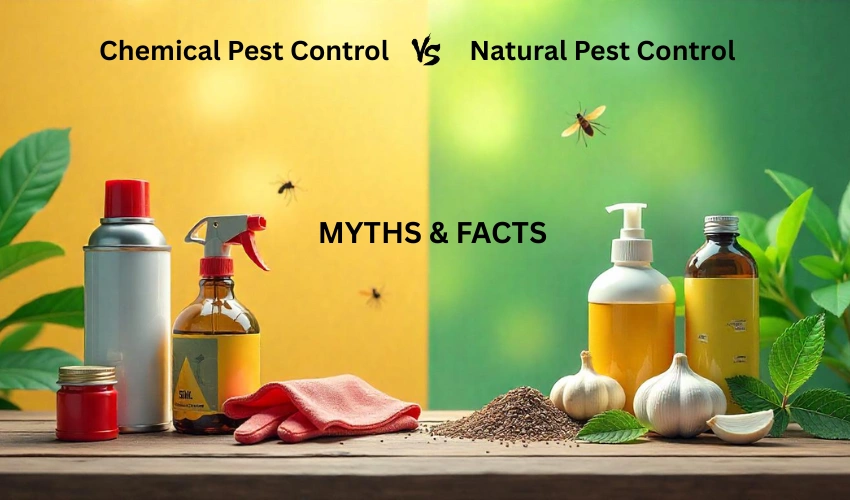
Have you ever debated whether natural pest control/chemical pest control works—or if it’s just hype?
With so much conflicting information online, it’s easy to get confused about what works when it comes to keeping your home pest-free. Should you trust the fast-acting sprays from the store, or go for plant-based alternatives that claim to be safer? This ongoing debate between natural pest control and chemical pest control has sparked plenty of myths and misconceptions over the years.
In this blog, we’ll break down the most common myths and serve up the facts so you can make smarter, safer choices when tackling those unwelcome creepy-crawlies.
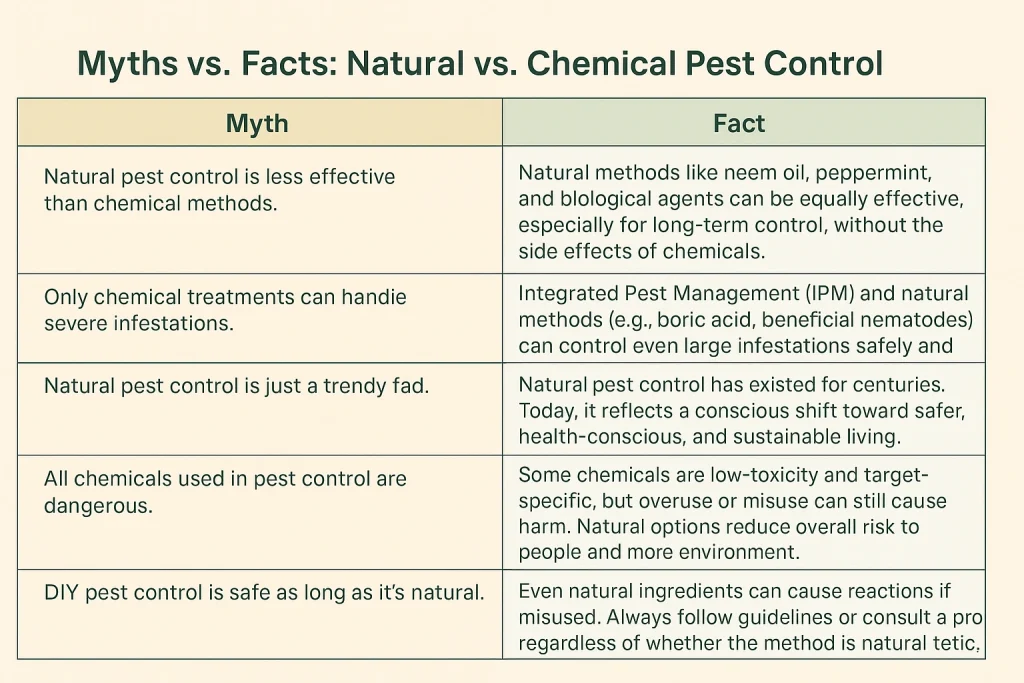
Myth 1: Natural Pest Control is Less Effective than Chemical Methods
Fact: One of the biggest myths about natural pest control is that it doesn’t work as well as chemical pesticides. The truth? When applied correctly, natural methods can be just as effective especially for long-term control.
Natural pest control uses substances like Neem oil, peppermint, and other natural substances repel pests while keeping the environment safe. These methods target pests without harming the surrounding environment. While they may require more time to show results, they don’t pose the same health and environmental risks associated with harsh chemical pesticides.
Chemical control might show instant results, but the pests often return, sometimes with increased resistance, making them harder to eliminate in the long run.
Myth 2: Chemical Pest Control is the Only Way to Handle Severe Infestations
Fact: It’s easy to assume that severe infestations require only chemical treatments, but that’s not always the case. Integrated Pest Management (IPM) techniques, which often incorporate natural pest control strategies, have proven effective against even large-scale infestations.
Pest control experts often introduce beneficial nematodes to handle termite problem or using boric acid, both of which are less harmful to humans and pets. Even rodents can be controlled with traps, natural deterrents, and sealing of entry points without necessarily resorting to toxic baits.
Moreover,Chemical sprays can worsen the situation when they kill beneficial insects that keep pest populations in check naturally.
Myth 3: Natural Pest Control is Just a Trend
Fact: The increasing popularity of natural pest control isn’t just a social media trend or a “green” lifestyle gimmick. It’s a conscious shift toward safer, more sustainable pest management.
People are becoming more health-conscious and aware of what goes into their homes, gardens, and food systems. These toxins often stay in the environment for years. Families with kids, pets, or gardens prefer safer alternatives that won’t compromise their well-being.
Ancient civilizations used herbs, oils, and other natural substances to keep pests at bay—long before people created synthetic pesticides.
Myth 4: All Chemicals Used in Pest Control Are Dangerous
Fact: Not all chemicals are created equal. Manufacturers design some chemicals to be low-toxicity or target-specific, meaning they only affect certain pests. However, even “safe” chemicals should be used with caution.
The danger lies in overuse or misuse. When chemical pesticides are applied without proper knowledge,They may pollute water, harm beneficial insects like bees, and trigger respiratory issues in humans. That’s why Training programs teach certified pest control professionals to follow strict guidelines and safety measures.
Having said that, using natural pest control techniques whenever feasible lowers your exposure to chemicals overall and promotes a healthier environment.
Myth 5: Chemical Pest Control Keeps Pests Away Permanently
Fact: One of the most false presumptions is this one. Chemical insecticides quickly kill visible pests, but they rarely fix the root causes of infestations.
After the chemicals wear off,Pests often return and sometimes build resistance to the chemicals. Regardless of the strength of your pesticide, pests will continue to return if the entry points, food supplies, or breeding habitats are not addressed.
In the long run, natural pest treatment is more dependable since it places an emphasis on prevention, habitat management, and sustainable solutions that help stop the issue at its source.
Myth 6: DIY Pest Control is Only Safe if You Use Natural Ingredients
Fact: While it’s tempting to assume that “DIY + natural = safe,” not all natural pest remedies are risk-free, especially if you use them in large amounts or the wrong way. Essential oils, vinegar sprays, and plant-based powders can still cause allergic reactions, pet toxicity, or skin irritation.
You should research even natural products and use the right dosages and with appropriate protective measures. That’s why whether you’re using synthetic or natural pest control methods, it’s always smart to read instructions carefully or consult a professional.
At the end of the day, pest control is about balance and informed choices. Chemical methods offer quick relief but also bring significant risks. Natural pest control focuses on sustainability, health, and prevention. By understanding the myths and facts surrounding natural pest control/chemical pest control, you can choose the approach that aligns with your lifestyle, values, and long-term goals.Remember, there’s no one-size-fits-all solution. Every infestation is different, and so are people’s comfort levels. The goal is not just to eliminate pests,without harming your family, pets or the planet.