Natural Pest Control in Chennai

10 Aug
Introduction
Termites may be small, but the damage they cause can be surprisingly expensive. They often remain hidden inside walls, wooden structures, flooring, and other hard-to-see areas until visible signs of an infestation appear. In a city like Chennai, where warm and humid conditions can support termite activity, early detection and professional treatment are especially important.
But how exactly does professional termite treatment work? Does one treatment eliminate the problem completely? What happens during an inspection? And how can homeowners prevent termites from returning?
Professional termite control follows a systematic process that begins with identifying the infestation and ends with preventive measures designed to protect the property. Understanding this process can help homeowners take the right action before termites cause serious structural or financial damage.
Why Is Professional Termite Control Important in Chennai?
Termites feed on cellulose, which is commonly found in wood, paper, cardboard, and other materials. They can attack doors, window frames, cupboards, flooring, wooden beams, and even hidden structural components.
DIY solutions may provide temporary relief when termites are visible. However, termite colonies are often hidden underground or inside structures. Killing visible termites does not necessarily eliminate the colony.
Professional treatment focuses on finding the source, selecting the right treatment method, and creating a protective barrier around vulnerable areas.
If you notice mud tubes, hollow-sounding wood, discarded wings, damaged furniture, or small holes in wooden surfaces, it is important to arrange an inspection as soon as possible.
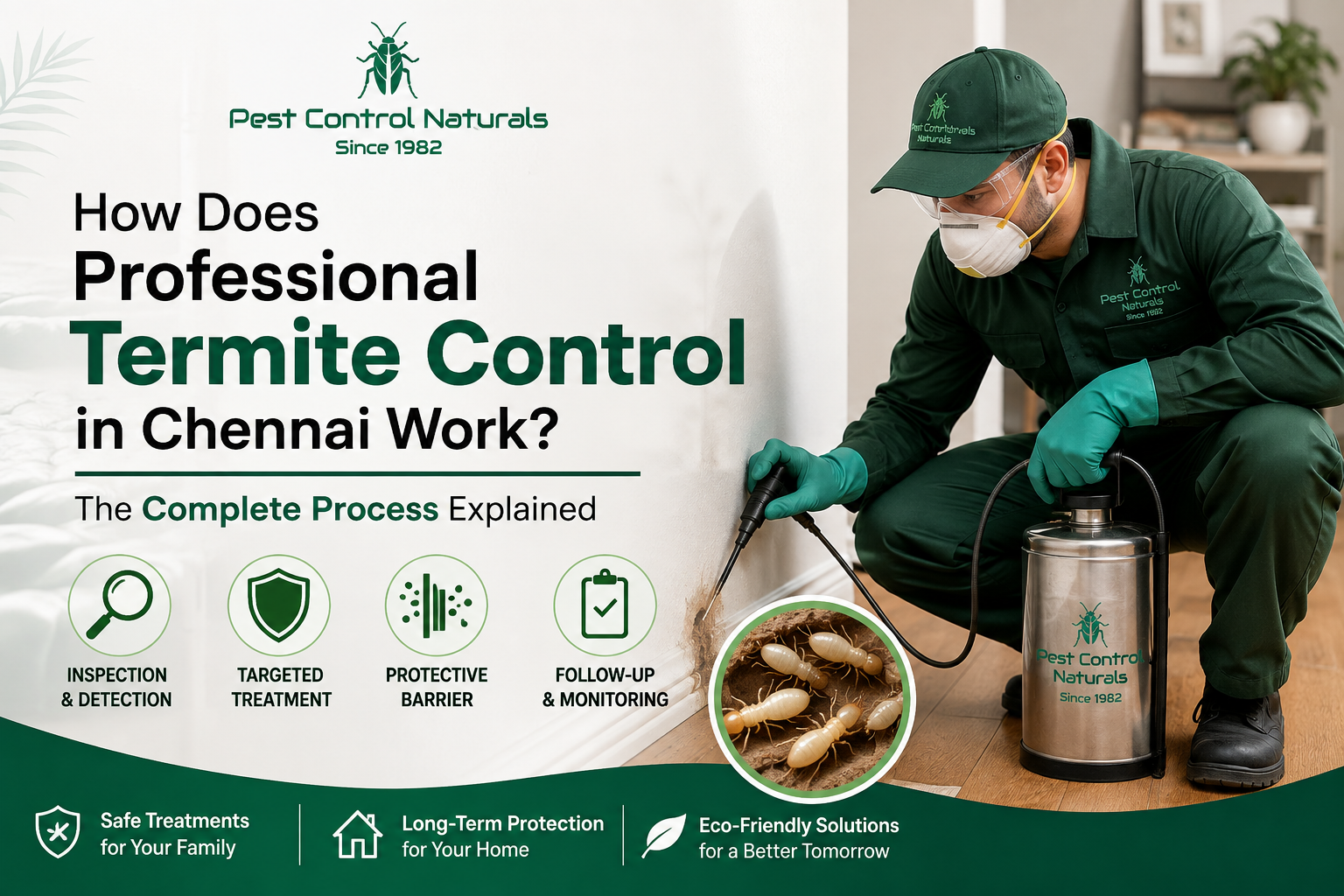
How Does Professional Termite Control Work?
A professional termite treatment generally involves several important stages.
1. Detailed Property Inspection
The first step is a thorough inspection of the property. Trained technicians examine areas where termites are likely to enter or establish colonies.
This can include:
- Wooden doors and window frames
- Cupboards and furniture
- Flooring and skirting
- Walls and cracks
- Foundations and surrounding soil
- Moisture-prone areas
- Garden and exterior areas
- Existing termite mud tubes
The inspection helps determine the extent and location of the infestation. Based on these findings, technicians can recommend an appropriate treatment strategy.
2. Identifying the Type and Source of Infestation
Not every termite problem is the same. Some infestations originate in the soil, while others may develop within wooden structures.
Professionals assess the signs of activity and determine where termites are entering the property. This step is essential because treating only the visible damage may leave the underlying colony untouched.
For homeowners searching for reliable Termite Control Chennai, choosing a service that begins with a proper inspection can make a significant difference.
3. Selecting the Right Treatment Method
Once the infestation has been assessed, professionals select a suitable treatment approach. Depending on the property and severity of the infestation, this may involve soil treatment, targeted treatment of affected areas, wood treatment, or a combination of methods.
For example, soil treatment can help create a chemical barrier between the property and termites approaching from the ground. Targeted treatments may be used around affected wooden structures or other identified areas.
The treatment method should always be selected according to the property rather than applying the same solution to every situation.
4. Applying the Treatment
The next stage involves carefully applying the selected treatment to the identified areas.
For soil-related infestations, technicians may treat specific areas around the building according to the treatment plan. For existing infestations, affected wooden or structural areas may receive targeted treatment.
Professional technicians also follow product instructions and recommended safety procedures during application. Residents should follow the service provider’s instructions regarding access to treated areas.
5. Creating a Protective Barrier
One of the key objectives of professional termite treatment is to reduce the chances of termites entering the property again.
Depending on the treatment method, professionals may establish a protective barrier around vulnerable areas. This can help prevent termites from moving from surrounding soil into the structure.
However, no treatment should be considered a substitute for regular inspection and good property maintenance. Moisture, leaks, cracks, untreated wood, and soil contact with wooden structures can continue to create favorable conditions for termites.
6. Follow-Up Inspection and Monitoring
Professional termite management should not necessarily end immediately after the first treatment.
Follow-up inspections can help determine whether termite activity has reduced and whether additional treatment is required. Monitoring is particularly useful for properties that have experienced significant or recurring infestations.
A reputable service provider should explain the treatment process, expected results, precautions, and any recommended follow-up schedule.
How Can You Prevent Termites After Treatment?
Once professional treatment is completed, homeowners can take several practical steps to reduce future risks.
Control moisture: Repair leaking pipes, taps, roofs, and drainage problems promptly.
Improve ventilation: Keep damp areas such as basements, storage rooms, and other enclosed spaces adequately ventilated.
Avoid wood-to-soil contact: Where possible, keep wooden structures away from direct contact with soil.
Remove unnecessary wood: Do not store firewood, cardboard, or wooden debris directly against exterior walls.
Inspect regularly: Check wooden furniture, doors, flooring, and other vulnerable areas for early signs of activity.
Address cracks and gaps: Seal potential entry points where appropriate, particularly around foundations and service openings.
These simple measures can complement professional treatment and help protect your investment over the long term.
Frequently Asked Questions
How long does professional termite control take?
The duration depends on the size of the property, infestation level, treatment method, and accessibility of affected areas. A basic treatment may be completed relatively quickly, while extensive infestations can require additional visits or follow-up work.
Can professional termite treatment completely eliminate termites?
Professional treatment is designed to control and eliminate termite activity, but results depend on the infestation, property conditions, treatment method, and follow-up. Regular inspections and preventive maintenance remain important.
Is termite treatment safe for homes?
Professional technicians use treatments according to product labels and safety requirements. Homeowners should follow all instructions provided by the service provider, particularly regarding treated areas, ventilation, and temporary access restrictions.
How often should a property be inspected for termites?
There is no single schedule that works for every property. Homes with previous termite activity, moisture issues, or other risk factors may benefit from more frequent inspections. A professional can recommend an appropriate monitoring schedule after assessing the property.
What are the early signs of termites?
Common warning signs include mud tubes, hollow-sounding wood, discarded wings, damaged wooden surfaces, small holes, and doors or windows that suddenly become difficult to open or close. Spotting these signs early can help limit damage.
Why Choose Professional Termite Control?
Termite management is not simply about killing visible insects. The real challenge is identifying hidden activity and addressing the conditions that allow termites to survive.
A professional approach combines inspection, identification, targeted treatment, prevention, and monitoring. This structured process can provide a more reliable solution than repeatedly treating visible termites with household products.
Pest Control Naturals provides professional pest management solutions designed to address termite problems with a systematic approach. Proper assessment helps determine the treatment strategy suitable for each property.
If you suspect termite activity, waiting can give hidden colonies more time to spread. Early inspection can help identify the problem before damage becomes more extensive.
Conclusion
So, how does professional termite control work? It begins with a detailed property inspection, followed by infestation assessment, treatment selection, professional application, protective measures, and follow-up monitoring.
The biggest advantage of professional treatment is the structured approach. Instead of focusing only on visible termites, technicians investigate where the infestation originates and how termites may be entering the property.
For homeowners in Chennai, taking action at the first sign of termite activity can help protect valuable furniture, wooden structures, and the property itself. If you notice signs such as mud tubes, damaged wood, or discarded wings, consider arranging a professional inspection rather than waiting for the problem to become more serious.
Choosing the right Termite Control Chennai service and combining professional treatment with regular property maintenance can provide stronger, longer-term protection.
For dependable termite management and preventive pest solutions, Pest Control Naturals can help you take the right steps toward a termite-free property.